01

Understand the duty
Start with the fluid, flow, head and operating profile.
 Discuss a project
Gulf Modern / Engineering solutions
Look beyond a single component. A useful engineering brief considers the duty, equipment, controls, installation and lifecycle together.

The complete picture
What needs to move? Under what conditions? And what does the installation need to achieve? Explore each part of the conversation.
05 System thinking
Follow the connections. Every engineering decision influences what happens next.
Start with the fluid, flow, head and operating profile.
Consider pump, pipework, controls and site conditions together.
Include commissioning, access, maintenance and documentation.
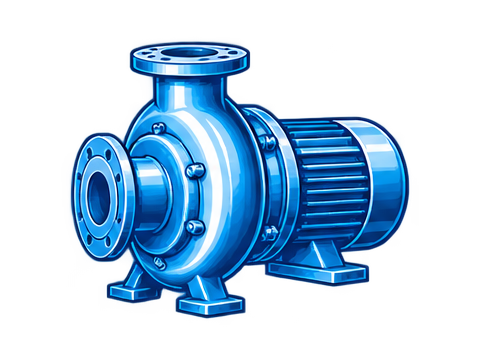
Conceptual process illustration. Equipment selection and service scope require application-specific review.
A more useful enquiry
A complete technical brief is rarely available at the first conversation. Clearly separate measured conditions, design requirements and estimates. If a key value is missing, include drawings or a description of the system instead of guessing.
Technical questions
General engineering guidance for preparing a requirement. Final selection and application suitability require a qualified review of the actual system and current equipment data.
Define the application, liquid characteristics, required flow and head, supply conditions, available utilities, controls, installation constraints and relevant operating profiles. Clearly label estimates separately from measured data.
Controls can coordinate starts, stops, variable-speed operation, alarms and protection in response to measurements such as pressure, flow or level. The required behaviour must be reviewed against actual motors, instruments and electrical interfaces.
Review equipment documentation, pipework interfaces, alignment, power supply, controls, protection, isolation, access and site safety procedures. Commissioning requirements depend on the approved design and equipment manuals.
Include manufacturer and model, serial number or nameplate, fault symptoms, operating history, previous repairs and part references. Do not assume spare parts fit based on appearance alone.