
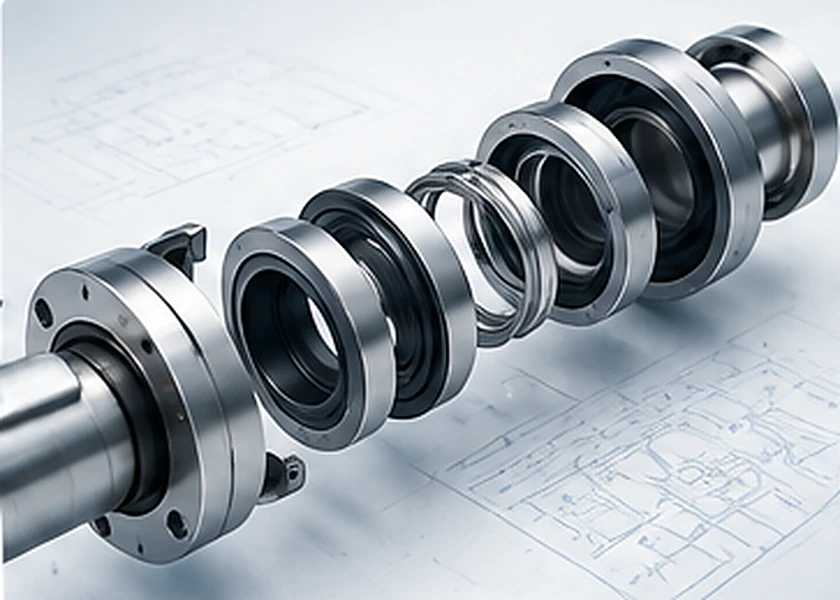
Mechanical seals separate a rotating shaft from the stationary pump casing while managing leakage. Seal reliability depends on the fluid, operating envelope, materials, installation and the condition of any required support system.
Select for the actual service
Consider fluid chemistry, solids, temperature, pressure, speed and duty-cycle variation. Materials and elastomers must be compatible with the process fluid. Difficult services may require engineered seal arrangements and support plans selected by qualified specialists.
Avoid dry running
Seal faces rely on suitable operating conditions and, for many configurations, a controlled lubricating film. A pump that operates without appropriate liquid or seal support can rapidly damage its sealing surfaces.
Inspect before reassembly
- Follow isolation, lockout and depressurization procedures.
- Check shaft condition, runout and the seal chamber.
- Keep faces and components clean during handling.
- Verify the specified installation dimensions and auxiliary connections.
Use the specific seal supplier’s documentation for limits, installation and maintenance procedures.
This technical article provides general educational information. Final selection, installation and maintenance require appropriate professional review and current equipment documentation.
Back to the notebook